
I have been at Midwest BankCentre now for seven years and four months. Sometimes I still think back to 2018.
At the time, I was serving on the board. I was not a banker by training. I did not come up through the traditional financial services path. I came into banking from a very different place with a background in human services, community development, nonprofit leadership, and lived experience.
And when the opportunity emerged to consider joining Midwest BankCentre after the then Chairman and CEO announced his retirement, I went through all the steps you would expect. I asked questions. I listened. I learned. I tried to understand what it would mean to lead a bank.
But I also knew something deep down.
I knew I had heart for work that mattered to the overall economy but did not always fit neatly into the traditional profit model of a bank.
I had heart for people who needed a fair shot.
I had heart for families who were working hard but still living too close to the edge.
I had heart for small businesses with vision but not always the capital, systems, or relationships to grow.
I had heart for communities where talent was present, faith was present, grit was present, but access was often missing. That heart came with me into the bank. It came with me because it was already in me.
I grew up poor in North St. Louis. I did not grow up with a concept of ownership. I did not grow up understanding banking, savings, checking accounts, credit, or capital. I understood cash in and cash out. You figured out how to get money, and then you used that money to survive.
That was the world I knew.
So, when I entered financial services, I did not enter it as someone fascinated first by balance sheets. I entered it as someone who understood what it meant to be outside of systems that other people take for granted.
Today, as the Accidental Banker, I think differently.
I see banking not only as a business, but as a platform. I see capital not only as money, but as movement. I see financial services not only as products, but as pathways.
And that is part of why we established Rising Together.
Rising Together was not created as a side project. It was not created to make us feel good. It was not created to decorate the bank’s community story.
It was created because we believe shared economic prosperity requires more than good intentions. It requires structure. It requires partnership. It requires discipline. It requires a place where ideas can be tested, relationships can be formed, capacity can be built, and people can be given a real shot at building a more stable life.
Before I even formally came into the bank, we had begun mapping out what this kind of organization could become. I am grateful for that early work because it gave us language, direction, and a foundation.
And that word matters: foundation.
Rising Together is about building the foundation of wealth-building: the tools, access, resilience, relationships, and capacity people and organizations need to move from surviving to strengthening.
Did you catch that?
Not just surviving.
Strengthening.
Because too often, we romanticize resilience. We tell people they are strong because they keep enduring hardship. But survival is not the same as stability. Grit is not the same as margin. Endurance is not the same as opportunity.
At some point, people need more than encouragement.
They need access.
They need breathing room.
They need systems that help them last without always needing rescue.
That is why our work is organized around three core pillars: Access, Resilience, and Capacity.
Access is getting in.
Access means people, nonprofits, and small businesses can realistically, reach and use fair financial and opportunity-building tools. It is not just about whether a product exists. It is about whether people can actually get to it, understand it, trust it, and use it.
For many people, the barrier is not laziness. It is complexity. It is mistrust. It is distance from institutions. It is cultural disconnect. It is not having someone who knows how to open the door and walk with them through it.
So access must be relational, not just transactional.
That means fair and responsible lending. It means small-dollar lending alternatives. It means relationship-based entry points through nonprofits, faith communities, civic organizations, and trusted local partners. It means asking a simple but powerful question:
Can someone actually get to opportunity without already being sophisticated, resourced, or inside the system?
Resilience is staying steady.
Resilience is about margin: financial margin, emotional margin, cognitive margin, and operational margin.
Households need resilience. Small businesses need resilience. Nonprofits need resilience. Communities need resilience. Because when people are one disruption away from crisis, it does not take much to knock them off course. A medical bill. A missed shift. A car repair. A delayed receivable. A funding cut. A storm. A family emergency.
That is why our work cannot only be about providing capital. It must also be about education, coaching, stabilization, and support.
The question is not simply: Did we provide help?
The better question is: Did we create breathing room and durability, or did we leave people constantly reacting to the next hit?
Capacity is lasting without rescue.
Capacity is where the work becomes long-term.
Capacity is not just program delivery. Capacity is the ability to execute again and again. It is the systems, skills, infrastructure, networks, and organizational strength required to solve problems sustainably.
For nonprofits, that may mean stronger financial management, fundraising readiness, governance, or operational discipline.
For small businesses, it may mean better infrastructure, clearer planning, stronger advisory support, and access to networks that help them grow.
For communities, it means building ecosystems, not just isolated interventions.
The question here is direct: If the bank or foundation stepped back tomorrow, would the organization or system still function better than before?
That is the work.
And these three pillars must work together.
Access without resilience means people may enter the system but fall out quickly.
Resilience without capacity means stability exists, but it does not scale.
Capacity without access means strong institutions can still exclude the very people who need opportunity most.
But when access, resilience, and capacity are aligned, something different becomes possible.
Durable shared prosperity.
That is the vision behind Rising Together.
It also connects directly to the good work we expect to do in partnership with others.
We know we cannot do this alone. We should not do this alone. The work is too important, too complex, and too rooted in community for any one institution to pretend it has all the answers.
That is why partnership matters.
We need nonprofit partners who are close to families and understand the barriers.
We need faith-based partners who have trust and moral imagination.
We need civic partners who can help align resources.
We need small business leaders who understand what it means to build under pressure.
We need community voices who will tell us the truth.
We need people around the table who will help us see what we cannot see by ourselves.
That is also why we launched the Shared Prosperity Council. The Council brings outside perspectives into the work and gives us a disciplined way to listen, learn, and respond. It helps ensure this is not compliance. It helps ensure this is not performative philanthropy. It helps ensure we are grounding our strategy in the real needs, real risks, and real opportunities of the marketplace.
The bank has done good work in community and economic development. And we have so much more work to do. Rising Together represents the next iteration of that work. It gives us room to experiment responsibly. It gives us room to build capacity the bank alone cannot build. It gives us room to fund systems-change work adjacent to banking but not constrained only by banking regulation. It gives us room to align capital, compassion, discipline, and community voice.
For me, this is personal.
I know what it means to grow up without access.
I know what it means to live without margin.
I know what it means to have potential but not always have the systems around you to convert that potential into opportunity.
And I also know what it means when somebody opens a door. When somebody provides a pathway. When somebody sees more in you than you can see in yourself.
That is why this work matters to me.
Rising Together is not about charity alone.
It is about dignity.
It is about shared prosperity.
It is about creating the conditions where more people, families, nonprofits, small businesses, and communities can move from the margins toward strength.
Access is getting in.
Resilience is staying steady.
Capacity is lasting without rescue.
Together, they form the foundation for the kind of prosperity we believe is possible not for a few, but for many. That is why we established Rising Together.
That is why we are building with partners.
And that is why the work ahead matters so much.
Closing Gratitude
I am deeply grateful to the James S. McDonnell Foundation, Midwest BankCentre’s Network for Good and to the many others who have chosen to believe in what we are collectively trying to build.
Their support is more than financial. It is a statement of confidence in the idea that access, resilience, and capacity can become more than words. They can become pathways. They can become partnerships. They can become the foundation for durable shared prosperity.
Rising Together, our 501(c)(3) tax-exempt organization, exists to help carry that work forward with focus, discipline, and deep community partnership.
And for every person, organization, and partner who has chosen to stand with us in this work, I am grateful.
“What vision are you still carrying that you need to keep building, even if it has taken longer than you expected?”
— Reflection Question
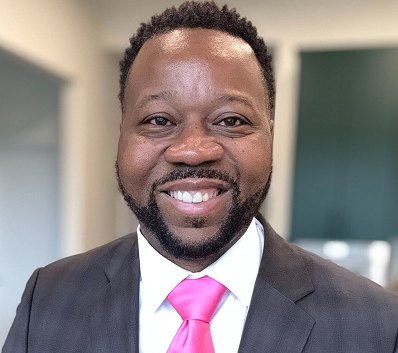
Hi, I’m Orvin Kimbrough, volunteer, board director, chairman, and CEO. I help professionals move from feeling stuck to being strengthened by reshaping how they think, lead, and live. My work focuses on confidence, leadership, and influence through mindset shifts, expanded networks, and bold, values-aligned action. My perspective is rooted in lived experience, from growing up in foster care to leading complex institutions as a CEO and shaped by faith, resilience, and a deep belief in human potential.
Books for Every Stage
A memoir often described as a leadership guide wrapped in an honest, relatable story of perseverance, healing, and growth. It explores how pain can be reframed into purpose and how ordinary people build meaningful lives through courage and clarity.
Written for teens and young adults, this book encourages confidence, resilience, and identity formation during the years when self-belief is being shaped.
A children’s book that gently introduces big ideas like belonging, courage, and hope, helping young readers see themselves as more than their circumstances
INTRODUCING: The Thriver’s Path™
This blog is part of The Thriver’s Path™ — a growing ecosystem of writing, courses, reflections, and community designed to help people of all ages reframe their thinking, reclaim their agency, and take their next meaningful move.
→ Ready for your next move?
Explore more writings, resources, and ways to engage at orvinkimbrough.com, or join the conversation inside the Thrivers Club™ community.
Enjoyed this post?
Stay connected and continue the journey with insights on leadership, growth, resilience, and intentional living delivered straight to your inbox.

Subscribe to the Leadership Insights Newsletter and receive:
-
 Thought-provoking reflections and leadership perspectives
 - Practical strategies for personal and professional growth
- Monthly insights and inspiration
- Early announcements and updates from The Thrivers Path™